
Truchet in Practice: Multiscale, Quilts, and Code
The classic square tile is only the beginning. Here are four directions the Truchet idea takes once it leaves the textbook — recursive multiscale patterns, fabric quilts, a few lines of generative code, and hexagonal mazes.
This is the practical sequel to our history of Truchet tiling. If you want the story of the 1704 friar and Cyril Stanley Smith's curved tiles first, start there — here we pick up where simple rules start producing surprisingly rich results.
From canvas to cloth: Truchet quilting
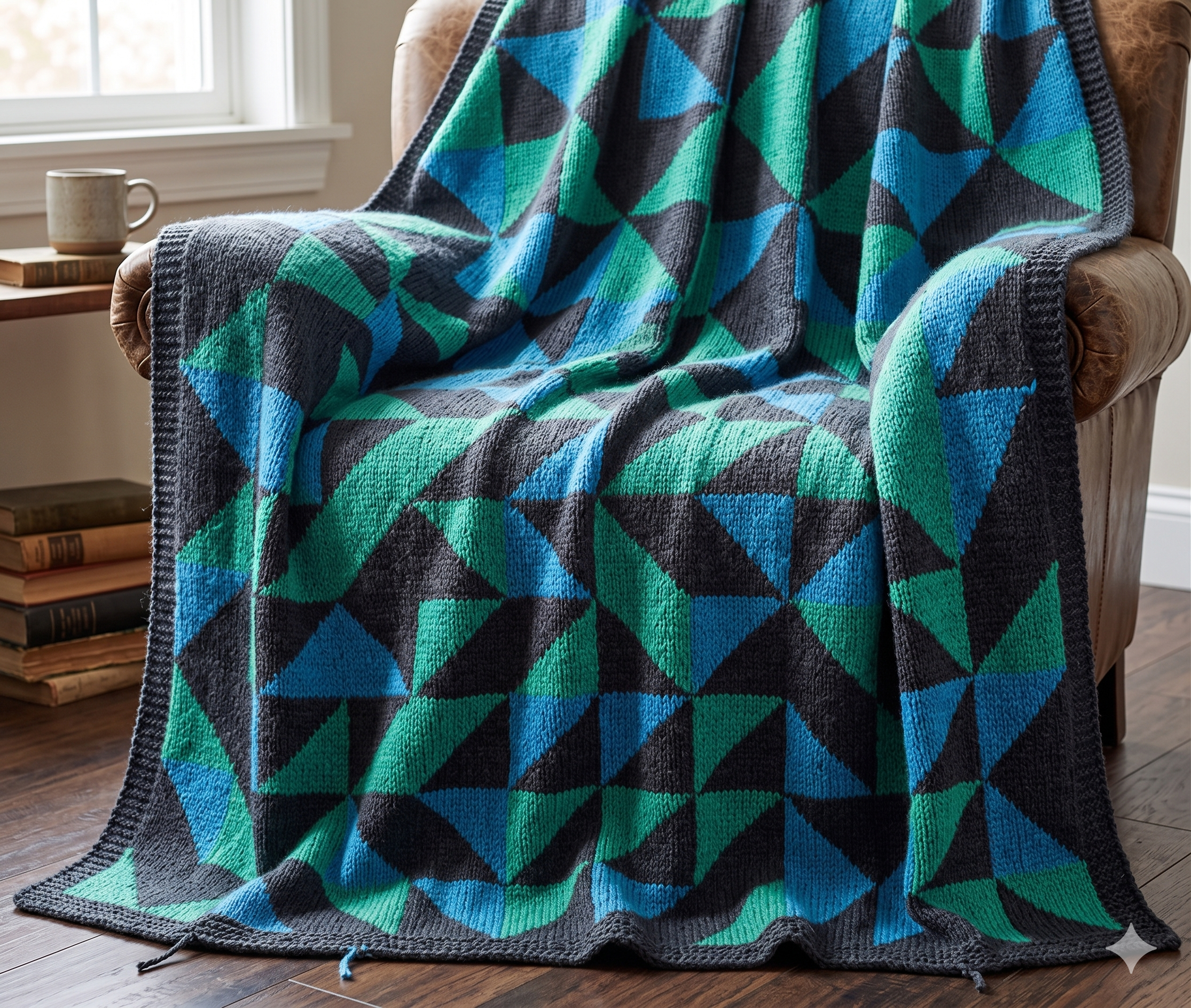
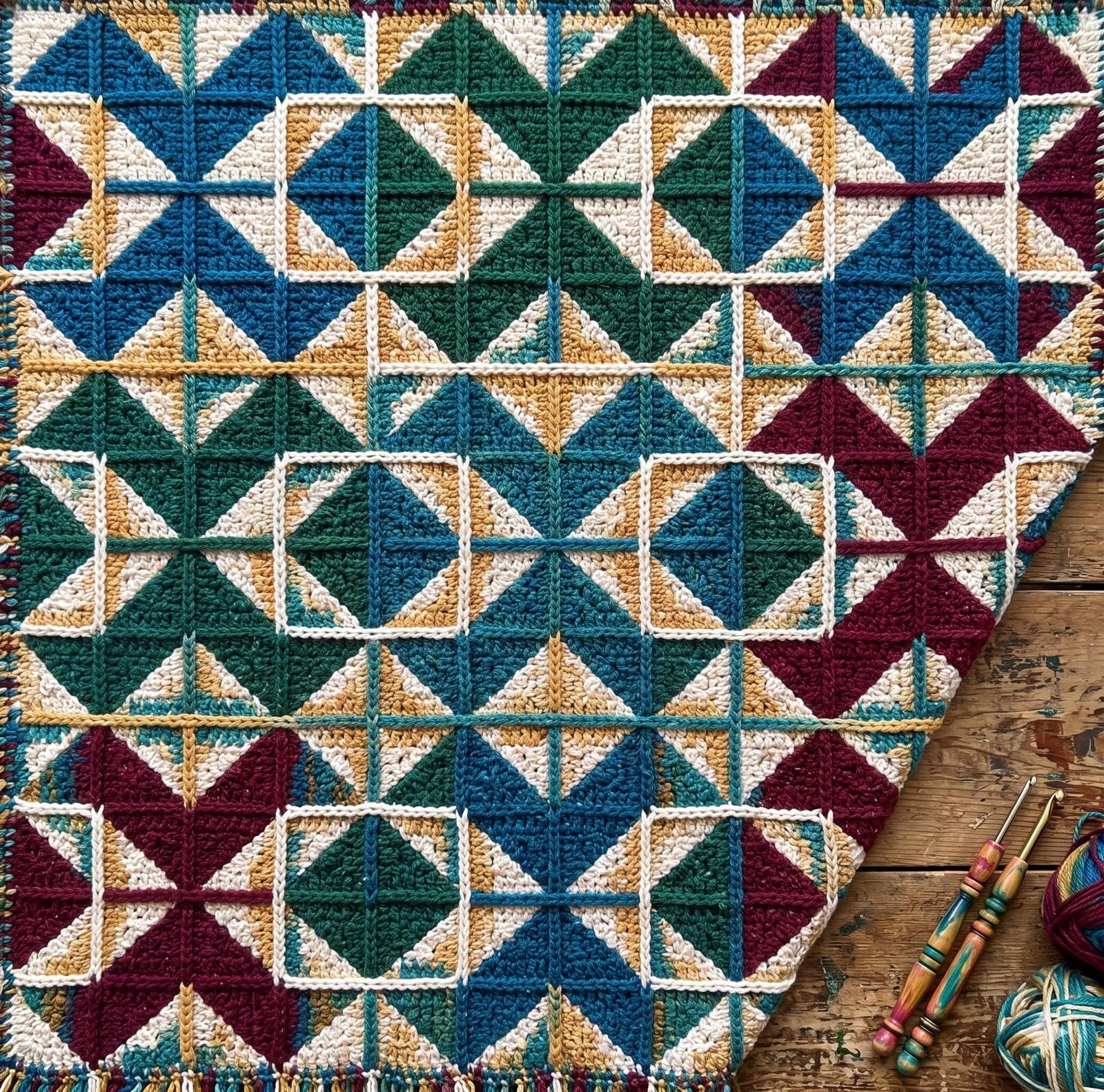
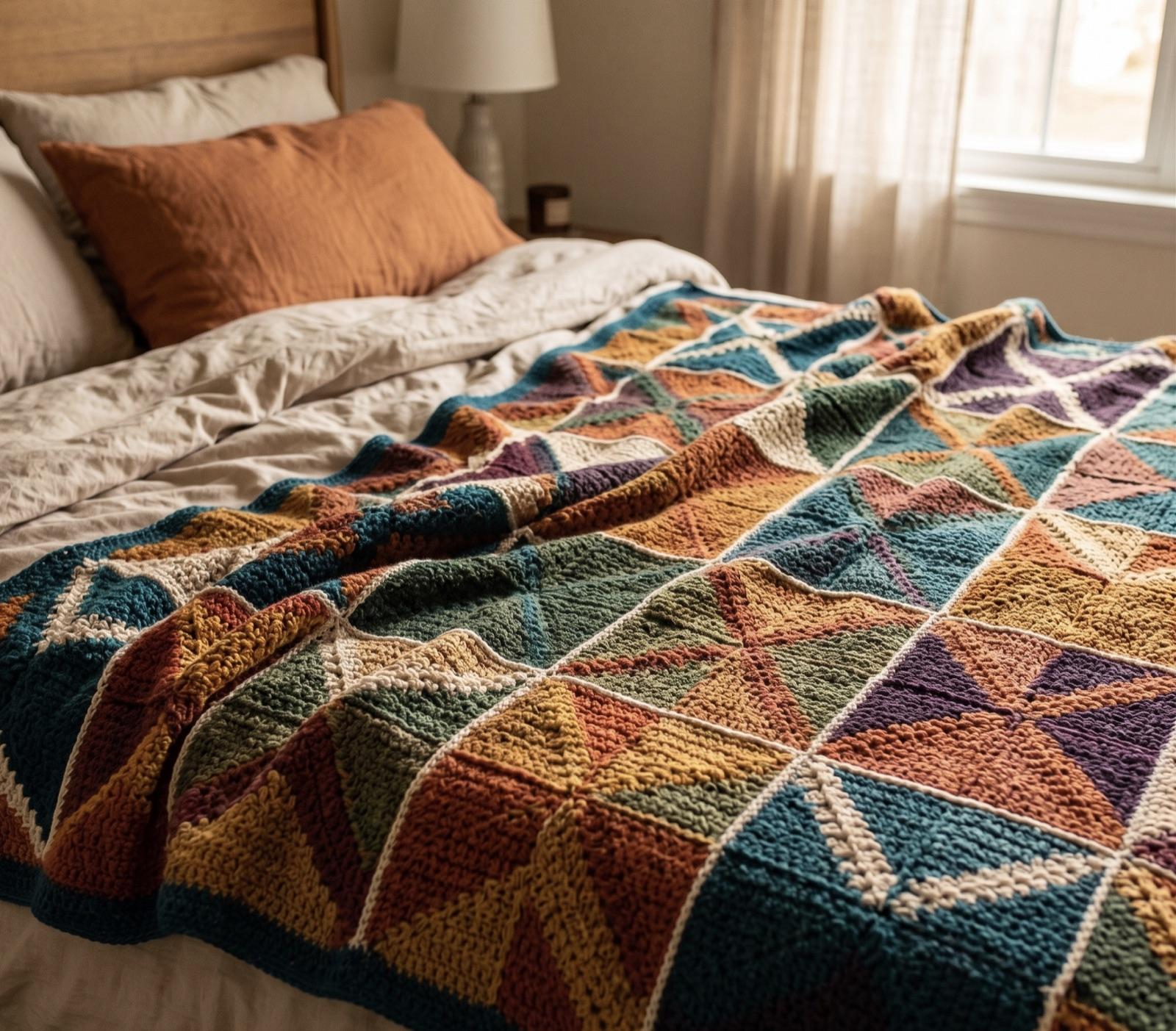
Because this site is called Patchwork, the textile connection is irresistible — and it is a real one. The half-square-triangle block, a cornerstone of quilting, is simply a Truchet tile in fabric: a square split diagonally into two contrasting triangles. Sew a pile of them, lay them out with the rotations chosen at random, and a unique whole-quilt design emerges every single time.
That is what makes Truchet ideal for quilters. A whole blanket can be built from just two or three basic blocks. There is no 'wrong' placement — every orientation joins cleanly with its neighbours — so a beginner can improvise an heirloom without a master plan. The randomness does the composing.
Multiscale Truchet: patterns within patterns
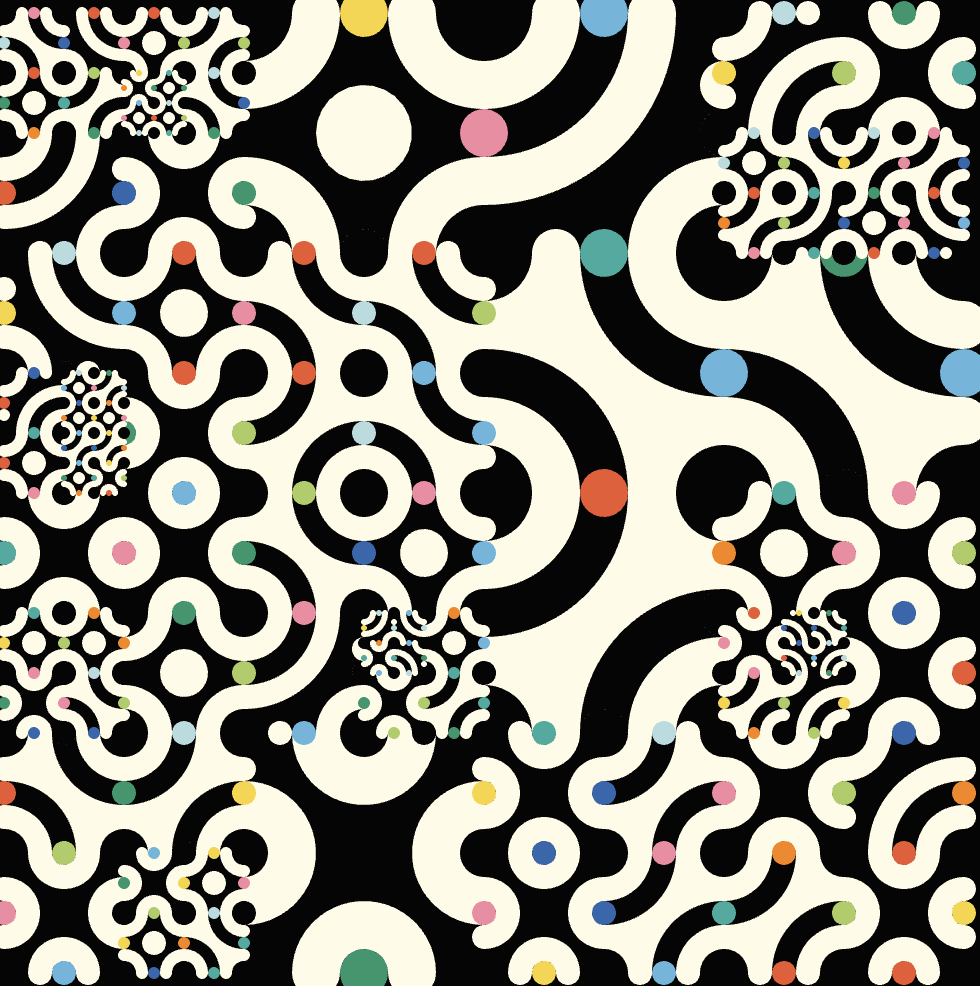
Modern generative artists rarely stop at a single grid size. In multiscale Truchet patterns — popularized by Christopher Carlson in his 2018 Bridges paper — each square can be recursively subdivided into smaller sub-squares, and each of those can subdivide again. Tiles exist at every scale, related by powers of one half.
The result feels organic, almost fractal: dense knots of small arcs sit beside large sweeping curves, and because the tiles are coloured by parity, each scale reads as foreground for the scale above it and background for the scale below. A handful of rules produces something that looks hand-composed.
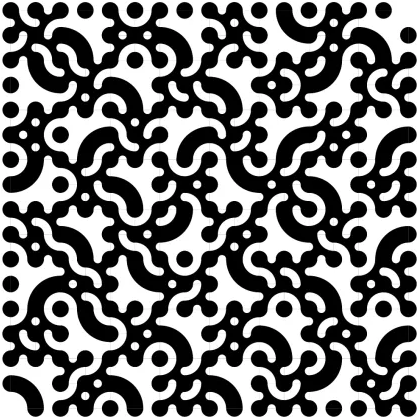
For a more playful multiscale example with coloured dots and nested arcs, see Roni Kaufman's OpenProcessing generator, which is what this script produces:
The 'Hello World' of generative art
For programmers, Truchet tiling is the canonical first sketch — the 'Hello World' of generative art. The entire idea fits in a double loop: walk a grid, and at each cell flip a coin to decide the tile's rotation. It is a few lines in p5.js, Processing, or Python, and it rewards you immediately with a pattern you would never draw by hand.
The whole trick is the single line if (random() > 0.5) rotate(90°). Everything interesting — the winding paths, the emergent labyrinth — falls out of that one random choice repeated across the grid:
If you want more Truchet sketches, browse this p5.js collection of scripts.
Swap the two arcs for a single diagonal and you get the classic angular labyrinth; raise the grid resolution and the pattern grows denser without a single extra rule.
Beyond the square: hexagonal Truchet
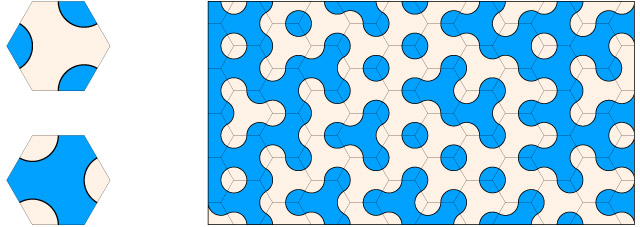
Nothing requires the tiles to be squares. Hexagonal Truchet tiles place 'gates' at the midpoint of each of the six edges and connect them with arcs. With six edges instead of four there are far more ways to route the connections, so a hexagonal grid produces noticeably more variation than a square one.
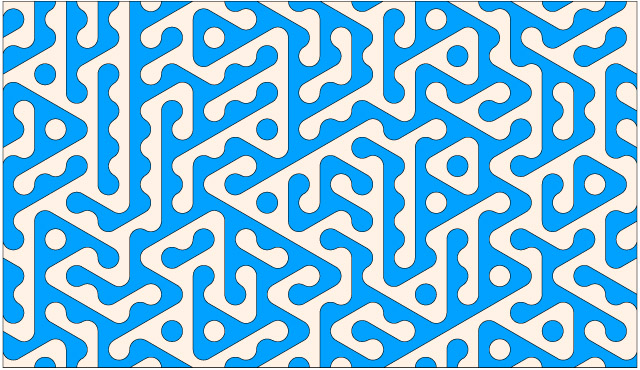
The payoff is flow. Where square tiles meet at right angles, hexagons meet at 120°, and the continuous curves bend more gently — the mazes that emerge look more fluid and natural, closer to river networks or marbled paper than to circuit boards.
Cameron Browne has explored these duotone hexagonal tilings in depth — two prototiles tiled together yield endlessly varied flowing mazes:
Try it yourself
Patchwork already ships Truchet's diagonal tiles and Smith's paired arcs, alongside many related block families. Drop them on the canvas, pick your colours, and let random placement do the rest — the same principle behind every pattern above.
Want to watch new patterns emerge at the click of a button?
Try the interactive tile-combinations generator →
Open Patchwork and start tiling